
 Bill Gates once said, “Most people overestimate what they can do in one year and underestimate what they can do in ten.” This quote is known to those who worship productivity as I used to, but lesser known is what Roy Amara's famous law: we overestimate the short term and underestimate the long. When applied to technology, especially in this AI age, the outcomes are so limitless that the mid-to-long range future of 10 years is hard to even imagine.
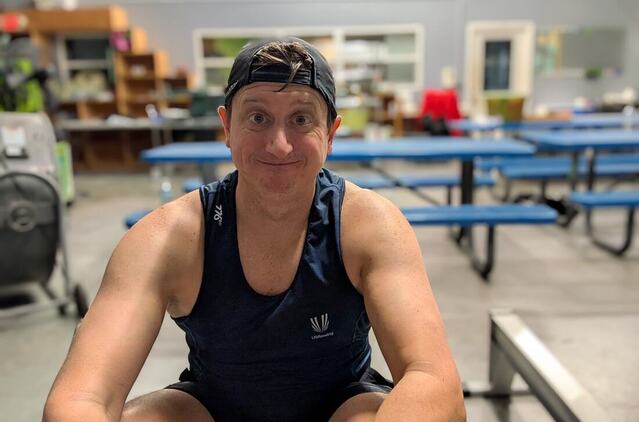
When applied to ourselves, the outcomes become a little more manageable. For 120 days this summer, I set a challenge to myself to row 1,000,000 meters. Rowing over 600 miles sounds impossible until you realize it’s just 8,333 meters a day, or about 11k with rest days factored in, for four months. It’s the kind of goal that demands consistency rather than heroic athletic feats. The work compounds, quietly, until the thing you thought was too big becomes the thing you already did. That’s the lesson: Most big goals aren’t undone by lack of ambition. They’re undone by a lousy calendar and bad expectations. Your impossible just needs better planning.
0 Comments
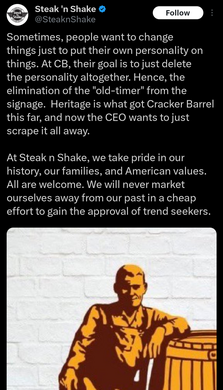 A little corporate ribbing is fair game. When Wendy’s roasts McDonald’s, we laugh because they’re rivals in the same weight class. But Steak ’n Shake and Cracker Barrel aren’t even on the same field. One slings milkshakes and shoestring fries through drive-thrus while the other sells rocking chairs in the lobby while you wait for meatloaf.
The chance at going viral explains social media aggression most of the time, but its likely not the culprit in this case. Sardar Biglari, CEO of Steak ’n Shake, owns over 2 million shares of Cracker Barrel stock, and instead of using that ownership to push for change internally or through the boardroom, he’s using his own company’s social media to torch another brand he’s financially tied to. This move is ethically complicated. A CEO shouldn’t treat a brand he runs as a personal bullhorn for an unrelated investment. If you want to play activist investor, put on the suit and head to the boardroom. But using one brand to publicly shame another you’re quietly betting on? That’s not social media banter. That’s just bad business. 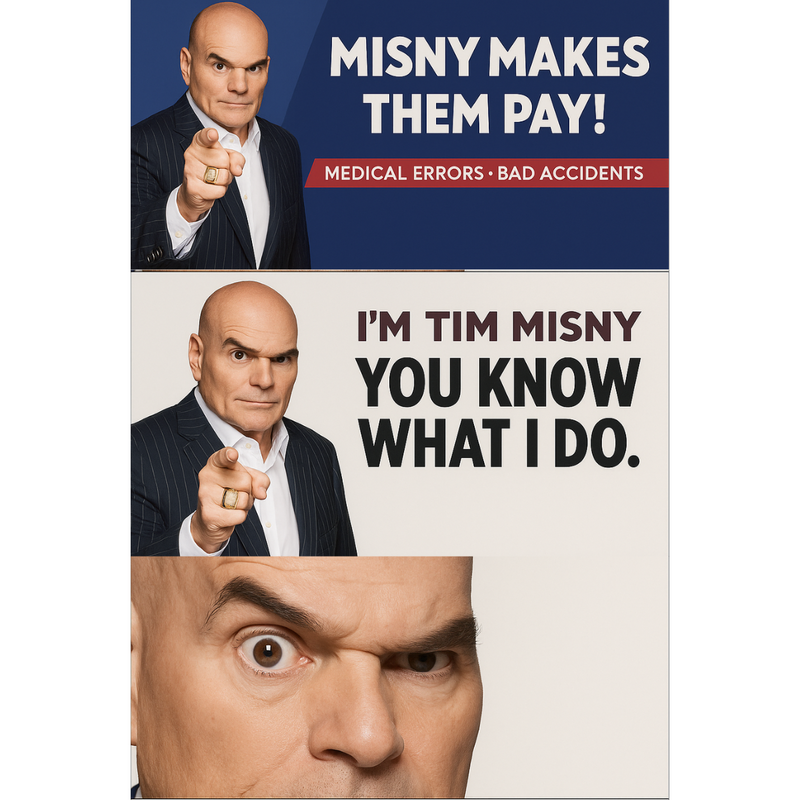 While most brands are in a race to become minimalist Helvetica zombies, Tim Misny is out here squinting at drivers like a bald eagle who moonlights as a litigator.
You can’t scroll through LinkedIn without seeing yet another legacy brand swapping out a classic logo for a sanitized, sans-serif shrug. The logic? Clean, modern, universally appealing. The result? Indistinguishable. Misny’s approach is the antithesis. It's loud, personal, and defiantly un-minimal. He doesn’t hide behind a font. He is the font. He doesn’t dilute his message to appeal to everyone. He concentrates it into something so potent, it leaves an aftertaste. The move toward blanding, err sorry, I mean branding, is about safety. It’s about not offending, not standing out too much, not making a mistake. But in trying to avoid being wrong, most brands forget to be anything at all. Misny, on the other hand, is unforgettable. He dares to be specific. Weird, even. And here’s the irony: while most companies are spending millions crafting universal “brand experiences,” Misny is just being himself. No gradients. No lowercase rebrands. Just menace in a pinstripe suit. In a world where everyone’s trying to be palatable, the man who dares to be distinct wins the billboard war. 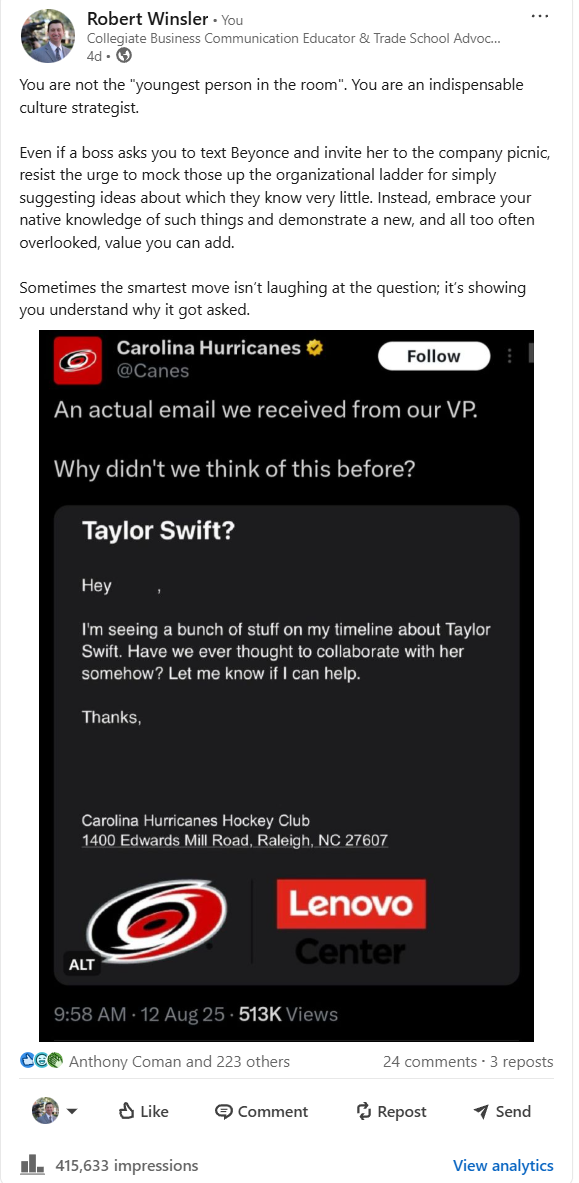 Last semester, a talented student started a blog and asked me to review her work. I did for the first couple entries then broke a promise to keep up the reviews when time got short near the end of the semester. When I checked this summer, she had discontinued the work.
The advice I would have given her is a credit to sports radio host Colin Cowherd: play the hits. Don't overthink the room. Your chances of finding success with something edgy and new or hyper specific are slim. You might find this strategy boring or cliche but just talk about what everyone else is talking about. LinkedIn reminded me of this strategy in a strange way when an innocuous post garnered nearly a half million impressions whereas no prior post of mine had ever topped 1,500 impressions and most averaged about 200. How did I 1000x my reach? The post talked about three things: a social media trend, the generational gap among co-workers, and Taylor Swift. These three topics would each alone be considered one of the "hits" but together turned an otherwise boring post into a ratings juggernaut. One viral post isn't going to make a big difference in your following. I picked up just a handful of new connections from the post despite its reach. But if you're truly looking to build an audience, forget the cutting edge and instead just play the hits. 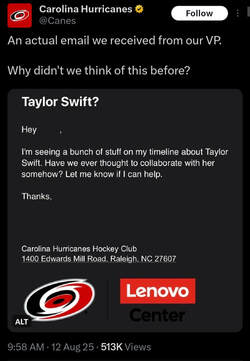 In the world of corporate brainstorming as well as in my classroom, you'll often hear the saying "there's no such thing as a dumb question." A Carolina Hurricanes VP took that cliche to its limits when he recently asked the social media team: what if… we just partnered with Taylor Swift? The hockey club recently shared an actual email from their VP asking if they’d ever thought of collaborating with T-Swift. It’s a beautiful snapshot of executive optimism and a gentle reminder that you're overlooking one of your best assets: your knowledge of pop culture. To a VP who doesn’t live on TikTok or in the trenches of pop culture economics, this proposal is just a neat marketing thought. To anyone under 30, it’s like suggesting you “just text Beyoncé” to headline the company picnic. This example highlights where your generational perspective becomes pure gold. What feels like common sense to you, such as the fact that Swift’s Eras Tour is an economic juggernaut bigger than most countries’ GDPs, is actually specialized knowledge to someone else. You’ve grown up immersed in it. You don’t need a research deck to explain why she’s not casually joining a hockey promo night. And here’s the twist: this gap isn’t a punchline. It’s a business opportunity. The VP’s email isn’t “out of touch” so much as it’s a request for translation from someone fluent in the unspoken rules of a generation’s culture. That’s you. When you share this knowledge clearly and without condescension, you stop being “the young person in the room” and start being the indispensable cultural strategist. Ideas like this are your cue to bridge the gap, to explain both the scale of the star and the possibilities of a more realistic win. Because sometimes the smartest move isn’t laughing at the question; it’s showing you understand why it got asked.  Netflix has roughly twice the market cap of Disney but the streaming behemoth wants to follow the House of Mouse in audience engagement, including future theme parks. But as someone who spends about a month out of each year at Disney with my family, I'm skeptical Netflix has the right content to forge the emotional connection with its new audience.
With over 300 million subscribers and growing, Netflix has branched into ad‑supported tiers, sports broadcasts like NFL games and boxing, live events, and immersive in‑person attractions called Netflix Houses, slated for Philadelphia and Dallas in late 2025 and Las Vegas in 2027. That’s not just streaming anymore. It’s an attempt at building a multi‑platform entertainment empire. Still, nostalgia matters. Disney’s power stems not just from content volume, but emotional legacy: generations of parents passing down films, theme park trips, and most importantly, the music the accompanies each. Netflix lacks the decades of iconic IP tied to family rituals like annual trips to Disney parks or singing along to “A Whole New World” in the car. The children may love Disney characters, my daughters certainly do, and I feel that connection too, rooted in my own childhood. Netflix’s new ventures may engage, but can they substitute for that sense of lifelong familiarity? Analysts are bullish: Netflix hopes to double revenue and triple operating income by 2030, targeting over 400 million subscribers. Its ad business is projected to generate billions in U.S. revenue, and its data‑driven ad targeting is increasingly sophisticated. But ad sales involve wrestling in a crowded arena with Meta and Alphabet; sports and event hosting require skills very different from streaming content curation. When it comes to physical venues, Netflix is testing smaller-scale immersive venues rather than massive theme parks. Netflix Houses occupy around 100,000 sq ft with rotating exhibits, dining, and merchandise shops but without true rides or immersive infrastructure like Disneyland or Universal Studios. Executing such ventures successfully demands a game plan Netflix has yet to prove it can sustain. So while Netflix’s complexity and ambition are impressive: a live talk show, video games, branded concerts, interactive experiences, there’s a gap between chasing Disney’s model and actually occupying Disney’s emotional space. It’s one thing to offer a “Squid Game” exhibit; quite another to become part of childhood memory like Disney parks or classic animated films. In short: I see Netflix growing into a broader entertainment company. I’m skeptical it can match Disney’s nostalgic foothold in family life. The media landscape is expanding, Netflix may succeed but the intangible bond Disney holds with families across generations isn’t easily replicated 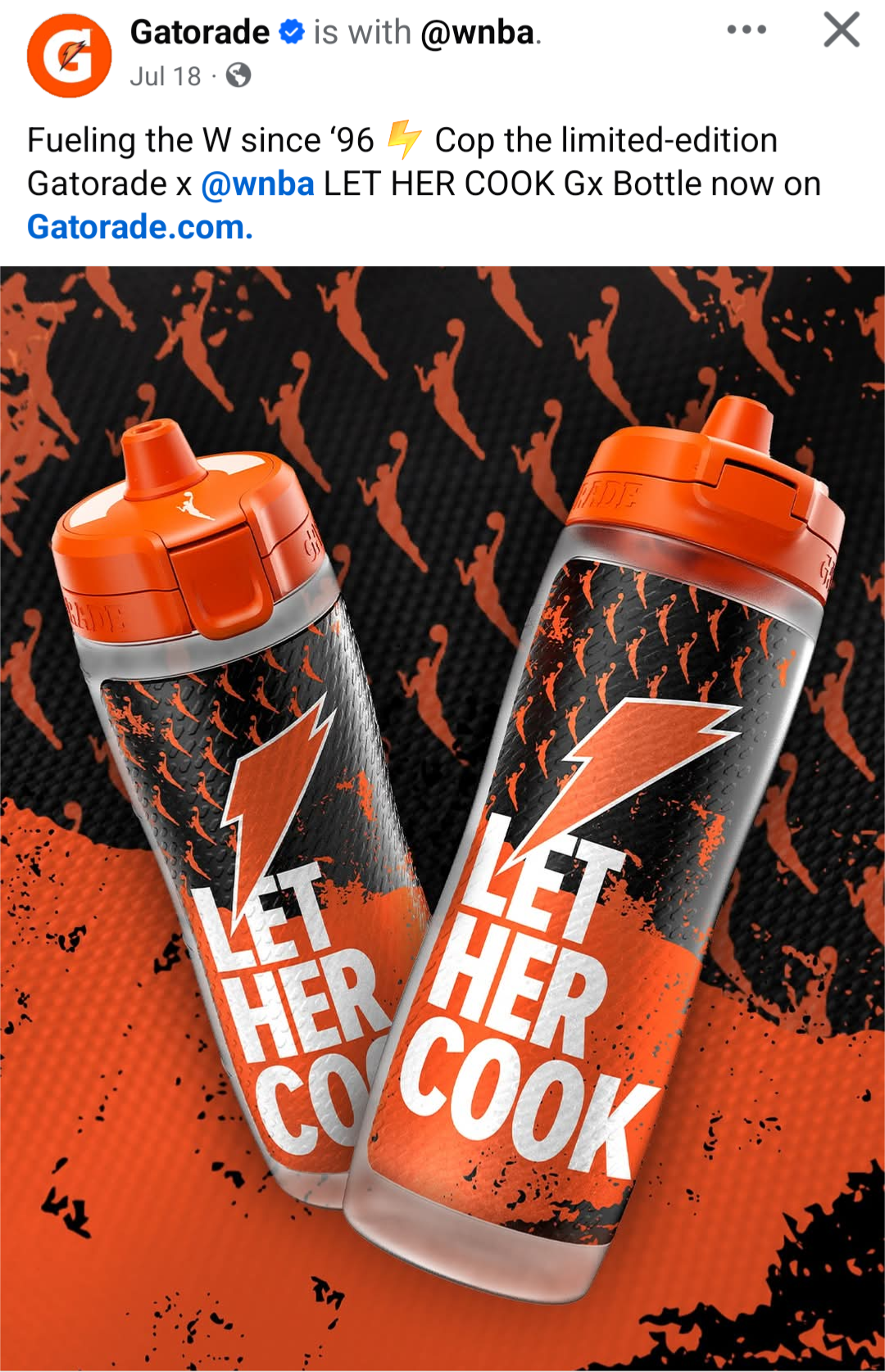 Is a little heat in the kitchen worth it?
That’s the real question behind Gatorade’s “Let Her Cook” campaign. Sure, the phrase sparked some social media side-eye, but before we cancel the whole menu, let’s look at what the campaign actually did: it kept building buzz around the WNBA. And not just die-hard fans. Everyone from sports media to branding academics started asking, “Wait, is this empowering… or embarrassing?” In a world where ad campaigns vanish faster than your attention span in an 8:30am Monday morning class, stirring up debate can be a feature, not a bug. The phrase “let her cook” was meant to celebrate elite performance, not culinary stereotypes. But words are slippery. “Cooking” for a male quarterback? Always a good thing until Russell Wilson ruined it. For a female athlete? Suddenly, we’re relitigating 1950s gender roles. It’s not fair, but it’s also not surprising. Still, maybe the genius of the campaign is that it leaned into the ambiguity. Like Nike before them—who’ve danced this dance with Colin Kaepernick, with “I'm Not a Role Model,” and with countless other purposefully controversial campaigns; Gatorade might be playing a longer game. You want cultural relevance? Sometimes that comes with cultural tension. What matters is what comes next. If Gatorade follows this campaign with real support—highlighting more WNBA stories, investing in visibility, getting actual players involved in shaping the narrative—then the controversy becomes a catalyst. The tagline moves from awkward pun to cultural pivot. On the flip side, if this was a one-and-done slogan with no depth behind it, then yes, it’s a bad joke at the wrong moment. Tone-deaf, not trailblazing. Think Burger King tweeting during International Women's Day. So is it worth it? Depends on whether this campaign leads to more coverage, more seats filled, more girls thinking, “I can cook too.” If it does, then yes. Stir the pot. We had an informal faculty meeting today, and the classic debate of how encouraged AI use in our business writing class surfaced once again. So here’s the question plainly, future CMOs and PR powerhouses: should generative AI be a staple in professional writing? Or should it be treated like Wikipedia on a research paper—helpful background, but don’t quote it? On one hand, AI can crank out emails, reports, and even press releases in the time it takes you to think of a headline. It’s the intern who never sleeps and doesn’t ask for credit. But on the other hand, if everyone starts delegating their thinking to machines, are we outsourcing our voice? Our judgment? That little spark of “you” that makes communication, well, human? Yes, AI tools can elevate a draft and tighten the grammar, but should they be crafting your client strategy memos or apology tweets when the brand messes up? Imagine the CEO’s heartfelt message about layoffs written by a bot. Feels a bit cold, right? There’s also the issue of originality. If everyone is using the same tool trained on the same data, what happens to creativity in the marketplace of ideas? If ten companies use AI to write their mission statements, don’t they all end up sounding like they were written by the same over-eager consultant? So, let’s throw it to you: Should generative AI be encouraged in professional writing because it boosts efficiency and consistency? Or should it be discouraged because it risks homogenizing voices and diluting responsibility? Pretend you’re already five years into your career. You’ve got a big presentation and a tight deadline. Do you write it yourself, AI by your side? Or do you hand the whole thing off to the algorithm and hope it nails the tone? Let’s hear your take. 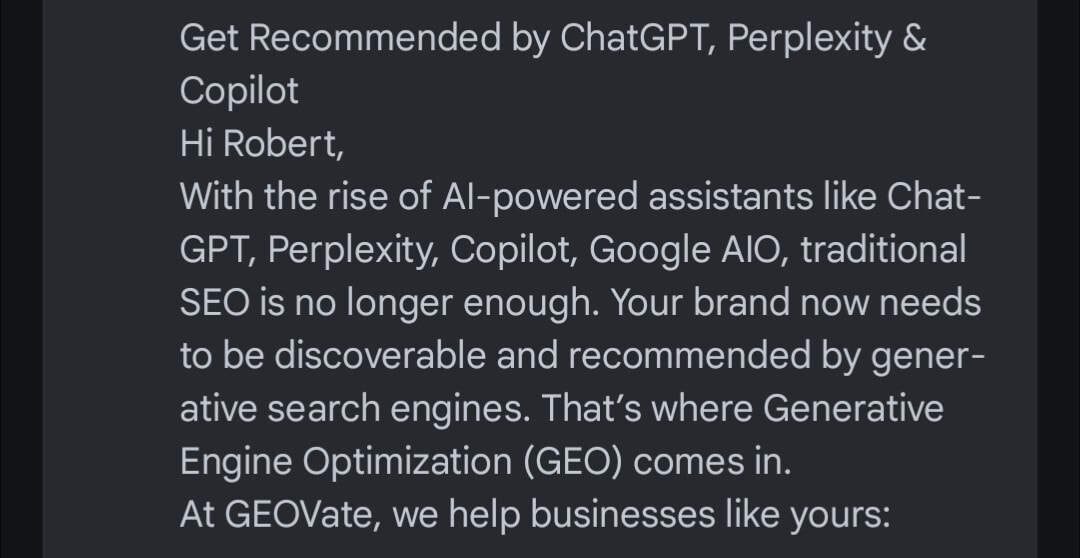 Every few years, a new job title drops that sounds like it was invented by a sci-fi novelist with a tech startup. This year’s champion? Generative Engine Optimization specialist. That’s right. Not search engine optimization. Not social media manager. We’re talking about people who know how to make ChatGPT and its cousins talk about your brand like it’s their favorite band in high school.
This presents a curious challenge for educators. They’re trying to prep kids for careers that didn’t exist during last semester’s curriculum update. How do you teach someone to do a job that literally doesn’t exist yet? It’s like training someone to be a “teleportation logistics coordinator” just in case wormholes become real next Thursday. The short answer is, you can’t. Not directly. But what you can do is teach agility. Teach how to learn. Teach critical thinking, writing that doesn’t bore the reader, and how to ask the right questions. Because the secret behind jobs like “Generative Engine Optimization” isn’t the jargon. It’s storytelling. It’s strategy. It’s understanding how machines think and how people feel. Educators who get this aren’t just giving students a playbook. They’re giving them a compass. Because whether the job title is AI whisperer, algorithmic ethicist, or empathy engineer, the people who thrive will be the ones who know how to think, write, adapt, and explain things clearly to humans and machines alike. So no, there won’t be an AP course in GEO anytime soon. But maybe there should be one called “How to Be Relevant in Five Years Without Losing Your Soul.” That’s the syllabus we really need.   Using my BlackBerry (2010) Pre-covid at the University of Tampa and going even farther back to as a grad student at the University of Florida (circa 2015-2019), I taught extensive history lessons in the browser war of the 1990s. I'll still mention this period in era in my current business writing classes, but not nearly in the detail I did when teaching Your Digital Life at UF and Digital Frontiers at UTampa.
Now, the World Wide Web Browser War II, or WWWII in my shorthand, may be on the horizon. Before we get to that, grant me a quick digression. My students know I hate Apple products, and while I did reluctantly use an iPhone from 2013-2019, I was one of the last of my friends to part with my BlackBerry Curve. One reason for this reluctance was thinking that no one would ever fully give up the browser in favor of apps. A time before the rise of apps can be difficult to imagine if your smartphone use didn't start until 2012, but the idea of leaving a centralized location where you could access all sites (a browser) for having to open each individual program for the site you wanted to visit (an app) felt like a technological regression, particularly when the apps of those days were inferior products to the company websites. Yet, the age of the apps reigned. Until now. AI companies like Perplexity and Open AI are following a recently released product Dia from the Browser Company into the race to build an AI-integrated app. Think of this browser as having an accessible chatbot to use while looking at a webpage, similar to any corporate website now but the chatbot is a product of the browser rather than the company's own internal program. The idea is many people, including myself, will find links in a browser then flip over to the Chat GPT app and paste the link with a prompt there. The AI browser would streamline this practice. Selling a generation that grew up on apps that a browser is a more useful tool might be an easier task than selling a generation that grew up on a browser that apps are the future, but regardless of the potential for widespread public adoption, the business showdown that WWWII presents could make for a fascinating sequel to the cutthroat stories just three decades earlier in the first browser war. Thought Questions:
|
Categories |
 RSS Feed